HOW IT WORKS
What is hydro-jetting and how does it work?
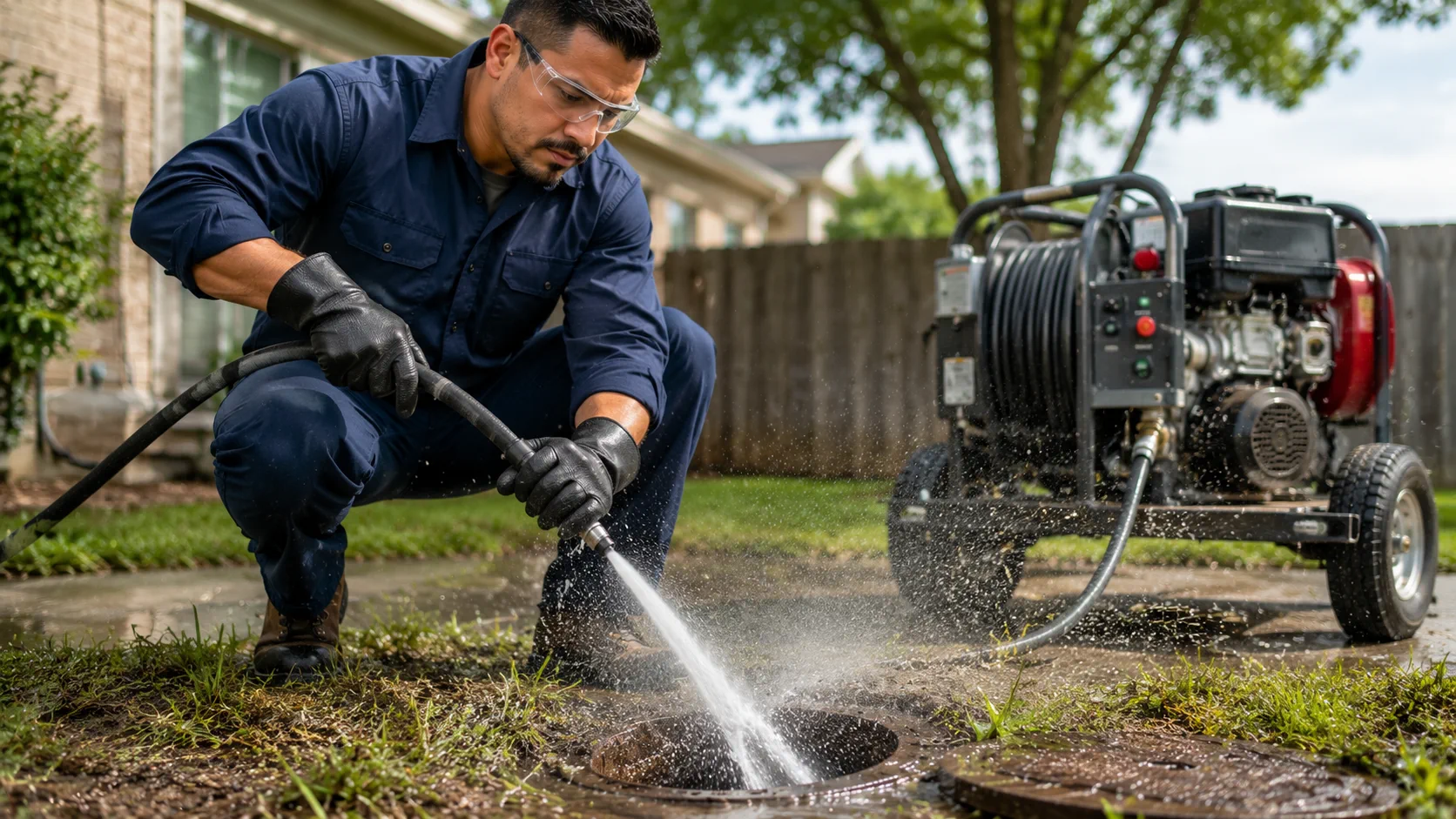
Hydro-jetting is a drain and sewer line cleaning method that uses a high-pressure water stream — typically 1,500-4,000 PSI — delivered through a specialized nozzle inserted into the drain or sewer line. The nozzle simultaneously jets water forward to break up blockages and backwards against the pipe wall to scour grease, scale, mineral deposits, and debris from the interior surface.
Unlike cable snaking, which punches a hole through a blockage without necessarily clearing the pipe walls, hydro-jetting cleans the entire interior circumference of the pipe from cleanout to cleanout. The result is a pipe that flows at near-original capacity rather than a pipe with a cleared center and heavily coated walls.
Hydro-jetting operates at 1,500-4,000 PSI — enough pressure to remove decades of grease, scale, and root mass from pipe walls.
Our Credentials
HYDRO-JETTING VS SNAKING
What is the difference between hydro-jetting and snaking?
For simple, one-time blockages in lines that are otherwise in good condition, cable snaking is fast and effective. For recurring clogs, grease-heavy commercial drain systems, or lines where camera inspection shows significant buildup, hydro-jetting delivers a more thorough result.
WHEN TO USE HYDRO-JETTING
When should you use hydro-jetting instead of snaking?
PIPE SAFETY
Is hydro-jetting safe for all pipes?
Hydro-jetting is safe for most modern drain and sewer pipe materials — PVC, ABS, and modern cast iron. It is not appropriate for pipes that are already severely deteriorated, cracked, or about to fail structurally. High-pressure water can accelerate failure in a pipe that is already compromised. This is why we conduct a camera inspection before recommending hydro-jetting on older systems. We assess the pipe condition first — we do not hydro-jet a line we know to be structurally fragile.
Learn about Video Camera Inspection →PRICING GUIDE
What does hydro-jetting cost in Maryland, DC, or Virginia?
FAQ